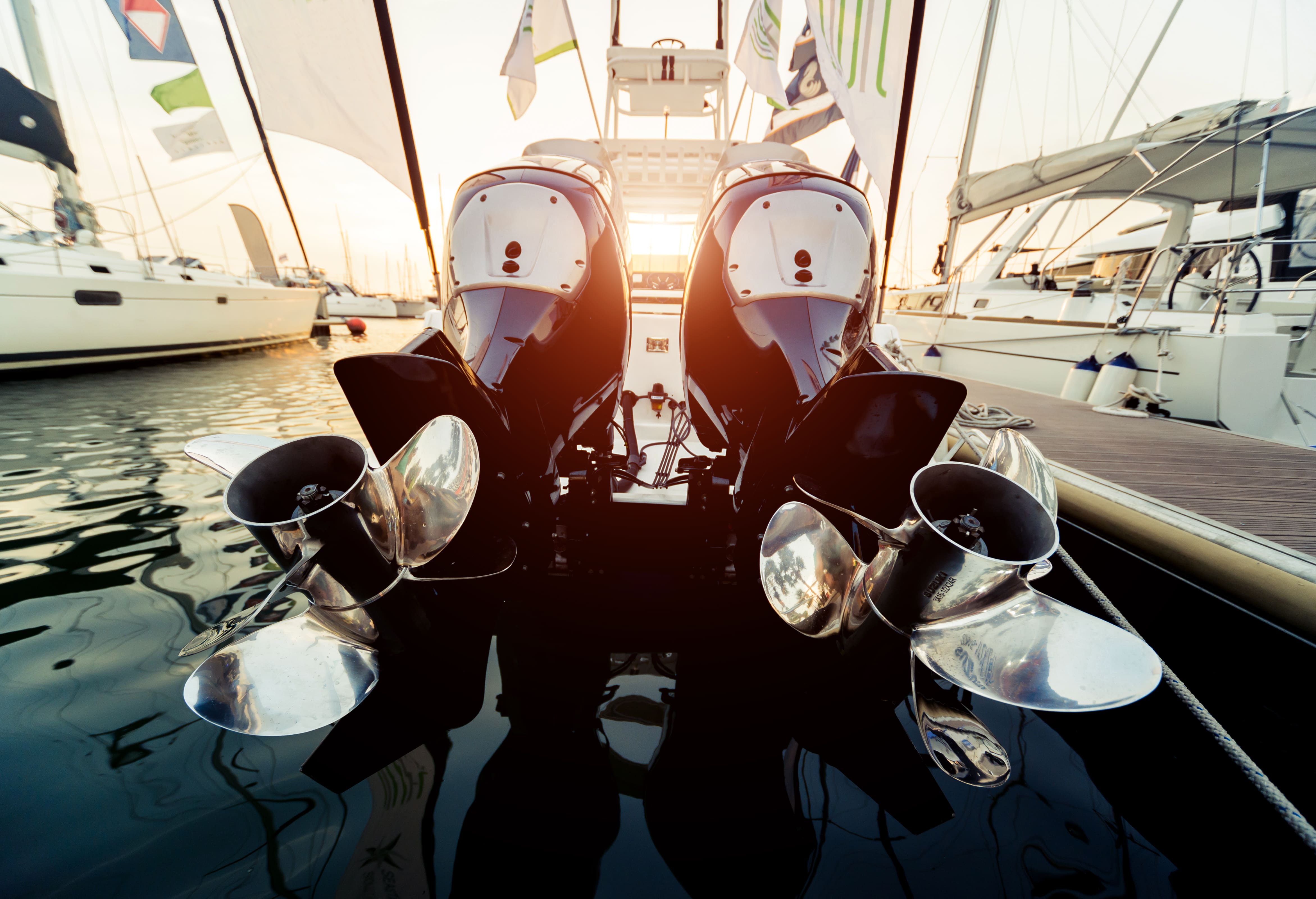
An eternal controversy among boat owners is the question of when is the best time to carry out a boat engine service – before or after the season. In this article, we explain why servicing boat engines, as well as other systems such as generators, after the season is the best time.
Boats and yachts must of course be winterised before winter. Winterisation is the ideal time to carry out the regular annual service of the engines. This includes an inspection of all visible parts of the installation machine and the drive. This allows damaged components to be identified and replaced with spare parts. This check will save you the trouble of avoidable breakdowns and possible longer delivery times for the required spare parts in the coming season.
If you have any questions about servicing the engines on your boat or yacht, please feel free to contact our experts at the Yacht Shop at any time.
Boat engine service in steps
Regular maintenance and checks are a prerequisite for the service life of your engine and drive to ensure it is in perfect condition. All manufacturers of engines in the marine industry, such as Volvo Penta, MAN, MTU and others, specify a standard maintenance schedule. The mechanics at Merk & Merk have years of experience in servicing and repairing all types of boat engines. As an official workshop, we are also equipped with special IPS drive tools through Volvo Penta Service.
With the maintenance work described by us as part of our boat engine service, you ensure optimum performance of your engine. This rule has been confirmed countless times in practice: Skimping on maintenance ends in time-consuming work and high costs when you need to have your boat repaired.
Change oil
The oil in your boat engine and gearbox should be changed after every 50 hours of operation, but at least once a year. Please bear in mind that with petrol or diesel engines in the leisure sector, downtimes are more important than operating times. Oil also ages, absorbs condensation and the additives contained in the oil volatilise. For this reason, it is advisable to remove the old oil before winterising the boat engines in a professional service. This removes the pollutants from the engine with the oil and fresh oil is in the system during the downtime over the winter. If, for example, water is noticed in the gearbox oil, it is of course better to discover this as early as possible. Then you can find and rectify the cause before the start of the season without any time pressure before you winterise your boat.
Another reason to carry out the service after the season and before winterising: The oil change must be carried out while the boat engine is still warm. After winterising, the engines must not be started again until spring. If you then possibly start the boat for the first time in spring without a boat engine service, you would not like to have old and dirty oil from the previous year in the system.
Change oil filter
The purpose of the oil filter is to prevent dirt, metal parts and other harmful substances from circulating in the boat engine and causing serious defects.
The oil filter should be replaced after every 100 hours of operation, unless your boat engine operating instructions recommend a different maintenance interval. However, you should replace your oil filter at least once a year.
It is advisable to apply a thin layer of grease or diesel fuel to the rubber seal and only unscrew the filter by hand to make it easier to remove in the coming year. If your oil filter is already a little tighter after the season, it can harden even more by spring and loosening it in the new year can then be problematic and cause possible damage.
Change fuel filter
Fuel filters should be replaced once a year. This also applies to the filter cartridges in the pre-filter with water separator – also called separator filter, pre-filter or Racor filter. Pure water separators should be cleaned once a year.
It is important that the fuel system is carefully checked for leaks as part of the boat engine service, as this can allow air to enter the diesel system and cause malfunctions.
Change air filter
A clean air filter and – if present – a faultless crankshaft housing ventilation filter are prerequisites for maximum performance of your boat engine and optimum fuel consumption. Replace the filters after every 200 hours of operation, unless your operating instructions for servicing the boat engine specify a different interval, but at least once a year.
Many smaller diesel engines have an air filter, which is actually just an intake silencer without a paper filter cartridge with an internal steel screen to prevent larger objects from being sucked in. This component does not need to be replaced as long as it is intact. It is sufficient for this type of air filter to be cleaned with petroleum ether and blown clean and dry with compressed air every few years at the boat engine service centre.
Every engine and every system has a maintenance schedule, which must be observed in the owner’s manual of the boat engines. However, there is also work that does not have to be carried out annually, such as cleaning the heat exchanger, injection nozzles, turbocharger, replacing the engine foundation, compression test, replacing the dumper, replacing spark plugs in petrol engines and much more. The service life of V-belts or impellers, for example, is a maximum of 4 years, as is the frost resistance of antifreeze. The zinc anodes in heat exchangers must also be checked regularly and replaced if necessary. All this applies to engines as well as generators (Fischer Panda, Kohler, Whisper and others)!
Volvo Penta IPS and Sterndrives are subject to special maintenance intervals! Shaft drives must be checked annually for play in the bearings and the shaft seals also require regular maintenance and, if necessary, an upgrade to newer technology. The propellers should also be checked at the same time. Non-optimised propellers can lead to higher fuel consumption and poorer machine performance due to overloading.
Why a boat engine service at the end of the season is best
Conclusion: Maintenance of all systems, as well as the boat engine service at the end of the season, is the best solution for the upcoming winter. If additional problems are found, there is no time pressure from the “holiday ahead”!
After the service, your engine is ready to be prepared for hibernation and there is no need to worry about rust and frost. Before the start of the new season, all that remains is cosmetic work or even a more or less complex boat or yacht conversion.
Ask us for a non-binding quote for a professional generator and boat engine service including winterisation! Our quotations for servicing a system are drawn up to match the maintenance schedule.